Request a demo
Almetra raises $19M to boost factory productivity with AIRead news

Turn every shiftinto a smarter decision

Almetra helps manufacturing teams understand what's really happening on the production line, identify what's holding performance back, and make improvements with confidence instead of assumptions.

Request a demo

Shaping the future of manufacturing together with:

Almetra Capture

You already know performance isn't where it should be. The challenge is knowing why and fixing the right thing.

01

Many factories have dashboards, MES systems, and OEE reports

And they still can't explain why performance is falling short. Others are running almost blind, with nothing beyond end-of-day output numbers.

02

The problem is the same. Engineers spend time searching instead of improving.

Decisions get made on assumptions, incomplete insights, or the loudest opinion in the room. And the gap between where you are and where you need to be stays open.

Discover the system that turns operational reality into action.

Almetra Capture

Working along with people who make everything happen.

Using privacy-preserving video and AI, we continuously capture what's really happening across your production lines. Then, unlike most software, we work alongside your team to turn that insight into action and measurable results on the floor.

Workstation top viewProduction Data Tracking
Hover to playLive
Robot / machine viewMachine Stoppage Tracking
Hover to playLive
Bird's-eye viewMovement & Route Tracking
Hover to playLive
Daily operations

Run every shift with better information

Almetra turns production data into daily guidance—helping teams start informed, stay ahead of issues, and act before small losses become bigger problems.

Morning briefingLine 2Tue · 06:45
OEE72.4%▼ 3.1 pts vs target
Output1,240 u▲ 4% vs plan
Downtime74 min▲ 18 min

Biggest losses yesterday

  1. 1Labeler micro-stopsStation 638 min
  2. 2Material waitingStation 422 min
  3. 3Changeover overrunLine 214 min
Ask in stand-up: Why did the labeler stop 14× after 10:00?

Start every day informed

Automated morning briefings summarize yesterday's performance, rank the biggest losses, and prepare managers to ask the right questions in the stand-up.

Shift outputLine 3 · EarlyLive
668 / 720 u
93% of shift target · 1 h 30 left
ActualBelow targetIn progress

See every shift as it happens

Track hourly output, cycle times, staffing, and progress against target—without waiting for an end-of-shift report.

Almetra · Microsoft Teams#line-3-shift
AlmetraAppnow

Deviation detected · Line 3

Cycle time vs baseline+14%48.2 s vs 42.3 s · last 20 min
  • Matches 3 past events this month
  • Likely cause: tool wear · Station 4

Acknowledged by you · shift lead notified

Know where to act next

Almetra detects meaningful deviations and sends contextual alerts through Microsoft Teams or email, so the right people can respond quickly.

Weekly focusCW 453 recurring losses
  1. Next stepRe-time the carrier loop between stations 2 and 3.

    24 video clips as evidence
  2. Next stepCheck torque tool wear at station 4 before Monday.

    17 video clips as evidence
  3. Next stepPre-stage labels and fixtures before each changeover.

    9 video clips as evidence

Where to focus this week.

Recurring losses. Evidence. A practical next step.

Beyond agents

An agent is only as smart as its context.

Almetra combines video, machine data, AI agents, and employee feedback into one living model of how production actually runs.

Continuous loop

1Complete factory context

  • AI videoSees cycles, motion, interruptions, and work.
  • Machine dataConnects PLC, MES, ERP, faults, and downtime.
  • Employee feedbackValidates findings with the people who run the line.
  • ERP SystemsConnects orders, inventory, and production plans.

2From context layer to digital twin

One objective picture of the floor—continuously learning.

Every signal is connected, interpreted, and checked against manufacturing reality. The result is not another generic answer, but guidance your teams can trust and act on.

3Operational action

  • Brief the shiftStart every stand-up with the losses that matter and the why attached.
  • Act in real timeAlert the right team when output drops or a station falls behind.
  • Improve what recursProve root causes, prioritize fixes, and track the gains.
Explore our agents
Agent library

Proven on real shop floors. Adapted to yours.

Start with agents based on proven customer use cases and designed by senior shop-floor and engineering experts.

Agent builder

Or customise your agents on your own

Don't get stuck with pre-built agents. Build tailored agents and customise them around your use case, systems, data, and shop-floor setup.

Describe your agent

S/4HANA context MES · Line 3
  1. Reading cycle times from MESLine 3 · 9 stations · 30-day baseline
  2. Setting the triggerCycle time > baseline +10% for 15 min
  3. Adding context from S/4HANAOrder, material and shift plan
  4. Connecting Microsoft TeamsShift lead · #line-3-shift
Cycle-time watch · Line 3Ready · alerts the shift lead in Teams
Almetra14:00 · Shift handover digest
Shift summary · Line 2 · early shift 06:00–14:3030 min before shift end · data until 13:30
82,000pcsOutput
97.4%Availability
94.6%Performance
99.1%Quality
DowntimeTimeDurationReasonStatus
Labeler06:00–06:4040.9 minNo reason yetLabel roll change · waiting for materialOpenClosed
Filler09:12–09:208.1 minMachine fault E-217Closed
Capper11:20–11:233.2 minStarved by transfer starClosed

What happened at the labeler this morning? Reply in this thread with a voice note.
0:12

“Label roll ran out, the replacement wasn’t staged at the line.”

Report updated. Labeler stop classified as material not staged. This is the 3rd time this week. Want me to alert logistics 20 min before the next roll runs out?

Done. Logistics will get a heads-up in Teams.

Agent interaction

Every report starts a conversation.

Ask follow-up questions, explore best practices, change the structure, or add shop-floor context by text or voice. Your agent responds, updates the report, and becomes better aligned with how your team works.

Customer stories

Not from replacing people. From finally knowing where to focus.

Delivered within weeks of deployment without disrupting production.

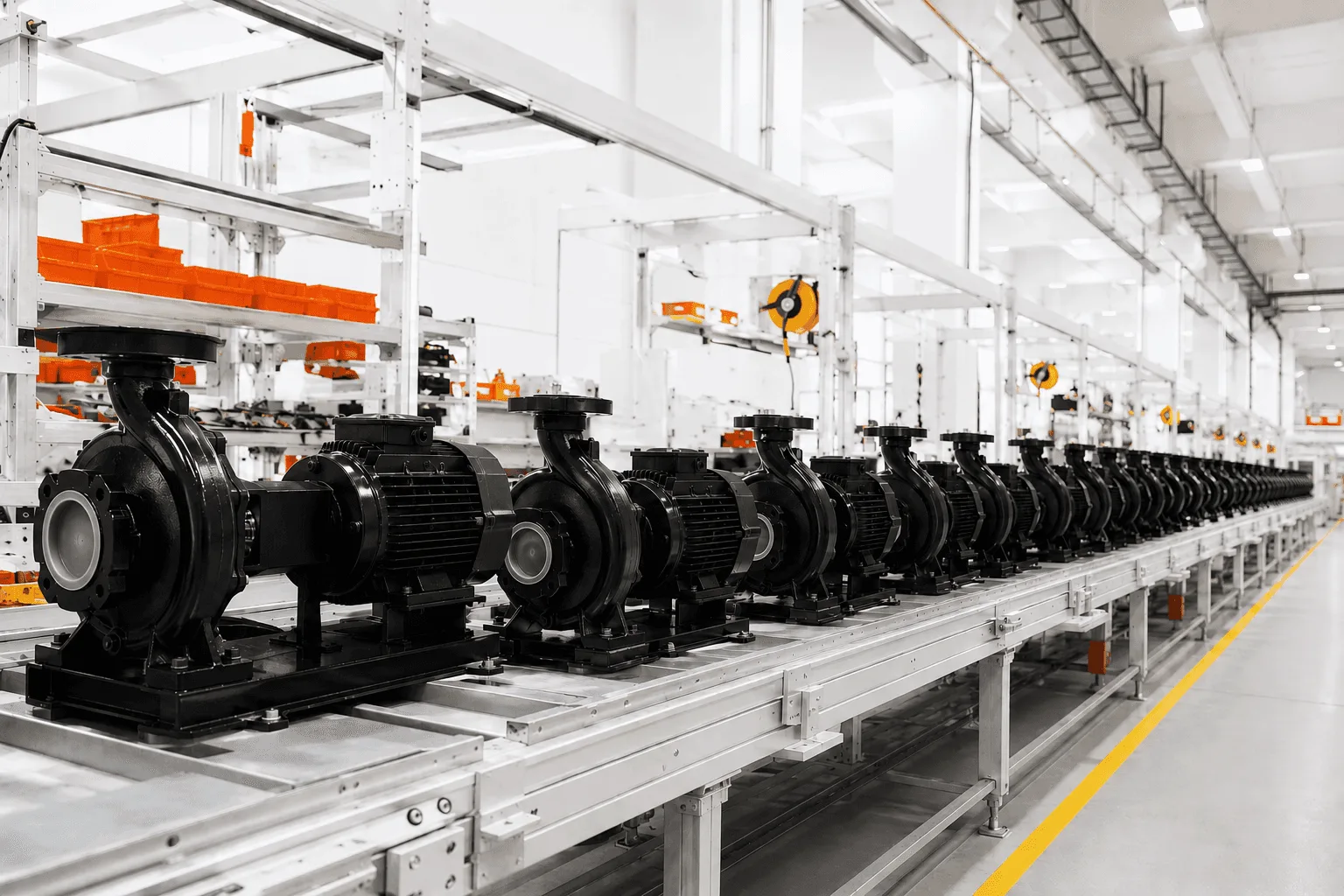
Grundfos production line

“We’d already driven huge gains manually - but eventually hit a wall. Almetra showed us what we couldn’t see and helped us increase output again.”

Filip MarjanovićProject Manager, Grundfos
Explore customer story
Privacy & security

Privacy is not a feature. It's the foundation.

Most AI tools arrive at the works council as a problem to manage. Almetra is designed so they become advocates, not obstacles.

Raw video deleted immediately

Footage is processed and discarded immediately. No stored video, no surveillance risk.

Processes tracked, not people

Individual performance is never captured or stored. We observe how work happens, not who's doing it.

High cybersecurity by design

GDPR-compliant. Works council co-decision. No performance ranking. Open to audit.

  • ISO 27001
  • EU AI Act
  • GDPR
  • SOC 2
  • NIS 2
  • TISAX

Questions? We're happy to meet with your works council directly.

Contact us

From insight to improvement on your floor this shift.

Request a demo
FAQ

Questions on Almetra answered.

Request a demo
01What is Almetra and how is it different from a camera or video analytics system?

Almetra is a factory intelligence layer, not just a camera product. Vision is how the system perceives the factory, but the value is what it builds from that perception: a structured, continuous record of how production actually works, combined with operational data from PLC, MES, and ERP systems. The output is operational intelligence that drives measurable improvement.

02What kinds of factories and production environments does Almetra work in?

Almetra is deployed across manual assembly lines, automated production lines, individual workstations, and mixed environments. Current customers include electronics assembly, heat pump production, pump manufacturing, and industrial automation. The platform is designed for discrete manufacturing; anywhere the gap between what systems report and what actually happens is costing productivity, quality, or ramp-up time.

03How long does deployment take, and what does implementation look like?

Most teams see their first real-time insights within two weeks of deployment. Installation involves mounting cameras as sensors on the production floor, connecting to existing system data where relevant, and configuring the AI layer for the specific process. There is no lengthy IT project. Almetra is designed to be operational quickly and to generate value before the implementation cost is fully absorbed.

04How does Almetra handle data privacy and worker concerns?

Almetra is privacy-preserving by design. Raw video is processed on-device and deleted within ten minutes. The system tracks processes, not individuals; workers are anonymised and no personal data is retained. The platform has been approved by works councils in Germany, Poland, and across other co-determined manufacturing environments. Privacy is not a feature that was added later. It was a founding constraint.

05Does Almetra replace our existing MES, ERP, or PLC systems?

No. Almetra integrates with those systems and makes their data more accurate and actionable. ERP and MES record what was planned or what machines reported. Almetra captures what physically happened between those signals and connects the two into a complete operational picture.

06What outcomes can we realistically expect?

Documented results across current customers include a 15% productivity improvement, a 20% cycle time reduction at Viessmann, and an 11% output increase at Grundfos. Payback periods have consistently come in under one year. These are not projections; they are outcomes from live deployments. The specific improvement depends on where the gap between reported data and reality is largest in your operation, which the first deployment makes immediately visible.

07Is Almetra only useful for improving existing lines, or can it help with new products and ramp-ups?

Both. For existing lines, Almetra delivers immediate visibility and improvement intelligence. For new products, new sites, and ramp-up scenarios, Almetra's longer-term role is to generate production blueprints: structuring how work should flow, where automation creates value, where bottlenecks are likely to appear, and how to move from first run to stable output faster than traditional methods allow.

08What does the path from pilot to full deployment look like?

Most engagements start with a single line or production area, just enough to generate clear results and validate the value before scaling. From there, expansion typically follows the data: the first deployment makes visible where the next highest-impact opportunity is. Customers often begin with semi-automated lines and expand into fully automated environments once the initial deployment proves its value.